

I wonder when exactly “sours” (or *chūhai*) became so deeply ingrained in Japanese drinking culture—evolving into a beverage that now rivals, or even surpasses, beer, sake, and whisky in popularity. Looking back, I don’t recall seeing sours in bars during my college days forty years ago; however, by the time the “bubble economy” arrived a decade later, they were already a fixture. This suggests the trend likely took off sometime between the late 1980s and early 1990s. Viewed in this light, the sour is still a relative newcomer. Yet, it sparked a boom for *shōchū*—a spirit once dismissed as a “poor man’s drink” and rarely consumed in places like Tokyo—and paved the way for the subsequent popularity of niche items like Hoppy and whisky highballs. It seems fair to say, then, that the period from that era to the present has been a time of radical transformation for Japanese drinking culture. So, who was actually drinking sours before they became a nationwide craze?
It is likely that the true origin lies in the run-down *izakaya* (serving *yakitori* and *yakiton*) of Tokyo’s working-class districts, where impoverished laborers—finding beer and sake too expensive—would wash down cheap snacks with *chūhai* instead. It is fascinating how times change: a drink born of resignation—a somewhat melancholy choice made because one had to forgo the beer or sake one actually craved—has transformed into something stylish (a shift that has undoubtedly succeeded in drawing more women into *izakaya*).
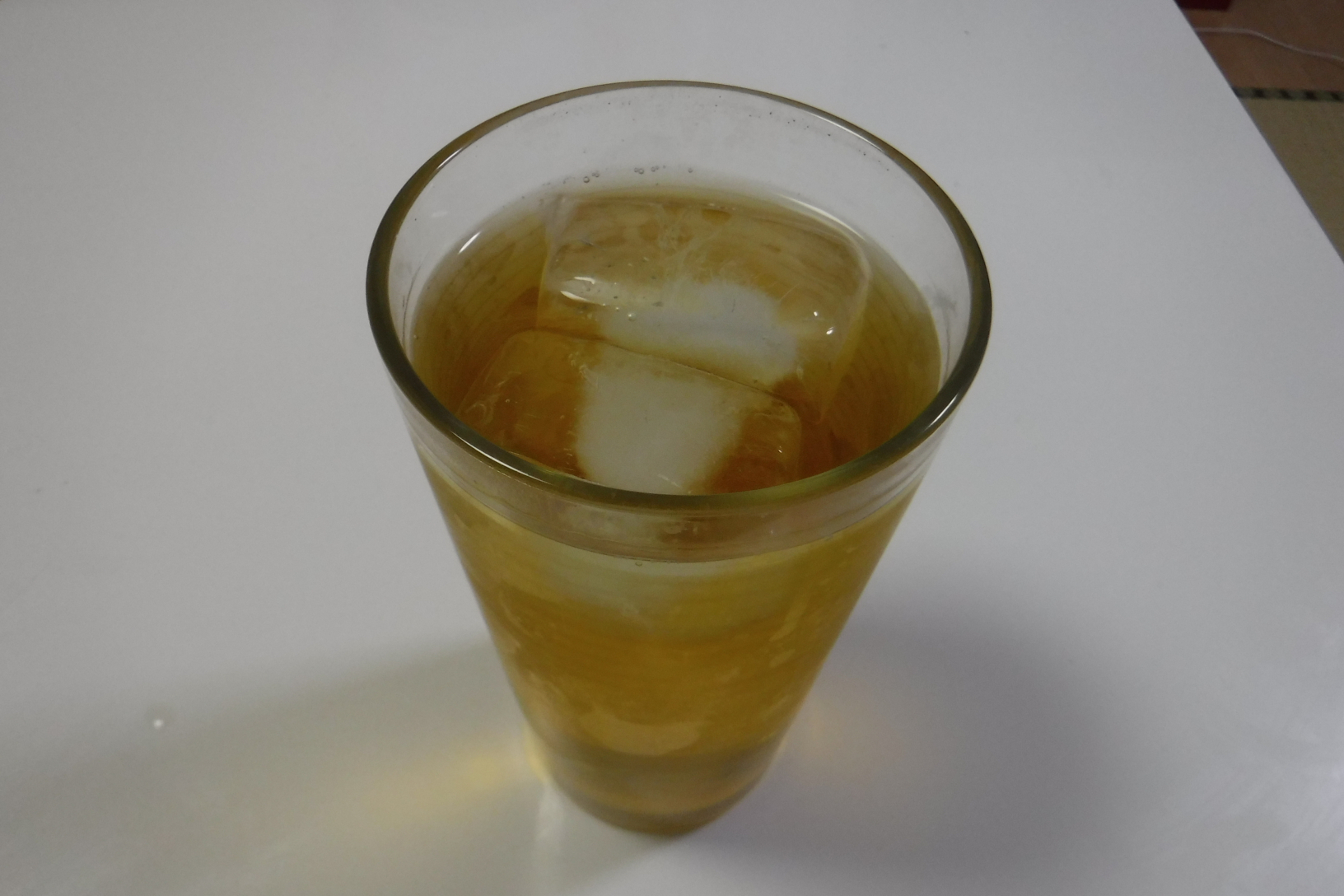
Among the various types of *chuhai* (shochu highballs), there is one—known as the “Shitamachi Highball”—that perfectly captures the atmosphere of the old-school, working-class neighborhoods (*shitamachi*) of that era; I wonder if you are familiar with it. While plenty of lively, independent izakaya chains serve it these days, it used to be found only in specific pockets of those working-class districts (and a few spots along the Chuo Line). I believe the first time I tried one was at an izakaya in Asagaya, on the Chuo Line. Visually, it has the hue of a plum sour, so one might expect a plum flavor, yet it lacks any distinct taste whatsoever. It is essentially flavorless—impossible to describe—and yet, calling it a standard *chuhai* doesn’t quite feel right either. When I asked a waitress what was in it, she simply brushed me off, saying it was a “secret.”
Back then, without a smartphone to look it up, I left the place without knowing the answer; once I sobered up, the matter ceased to matter. Years later, however, I happened to step through the *noren* curtain of a downtown *izakaya* and glanced at the counter, only to see most of the patrons drinking a yellow liquid—something resembling a “sour.” The atmosphere was such that one might think ordering any other drink was strictly forbidden. Before long, I realized it was that very “downtown highball.” Yet here, naturally, they didn’t call it a “downtown highball”—it was simply a “highball.” Lacking the boldness to challenge that atmosphere, I let that “downtown highball” slide down my throat for the first time in decades… and the memories came flooding back—that taste that was no taste at all. I had about three glasses, but surrounded by such a seasoned crowd of hardcore drinkers, I was too intimidated to ask, “What exactly is this extract?” and—regrettably—I left the shop feeling as though I had a bone stuck in my throat.
I had returned to my daily routine and forgotten all about it, but recently, after finishing a YouTube video featuring Kenichi Nagira, the platform suggested a related program: an episode of *Tamori Club* titled “Let’s Drink ‘Shitamachi Highball’.” Intrigued, I started the video and discovered it was a detailed feature on “Shitamachi Highball.” The program—featuring the manufacturing company’s president alongside Tamori, Kenichi Nagira, Suidobashi Hakase, and Tamabukuro Sujitaro—explored the history and proper way to drink it. I felt a strange sense of coincidence because it was filmed at “Enta,” an *izakaya* near my home (now closed; located in Minowa), and the manufacturer of the flavoring extract (Amo Beverage Manufacturing) was also based in Ryusen, Taito Ward—literally a stone’s throw from where I live. It was the moment that finally clarified a mystery that had puzzled me for decades.
What surprised me most was that the program had aired back in the 90s—several years *before* my first experience in Asagaya. I was dumbfounded by my own cluelessness: realizing how long it had taken me to find the answer, only to discover that the solution had been broadcast nationwide on TV—and was right there in front of me—long before I had even wondered about it. Yet, being quick to bounce back, I soon recovered and came to feel a sense of destiny regarding this drink.
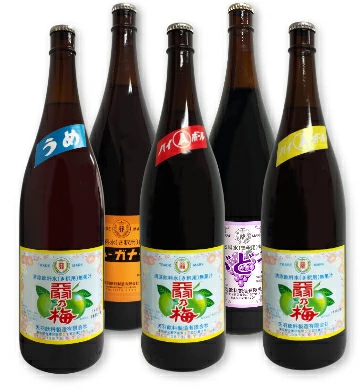
I immediately headed to the company to buy the drink, only to discover that they didn’t sell to the public. While wandering the neighborhood wondering what to do, I found it right under my nose—at “Mizukami Shoten” in Iriya, a shop I frequent. They stocked the full lineup (Highball Red, Yellow, and Blue [Plum]) as well as other hidden gems from Tenba Beverage, such as New Gunner, Grape Syrup, Lemon, Mint, and Red Ball. As a Tenba novice, I opted for the classic Red (980 yen for a 1.8-liter bottle) to take home. (Incidentally, Tenba products are cheaper at Mizukami Shoten than online.)
I immediately prepared a drink by mixing the *Ko-rui* shochu (as specified on the label) with one-third water, then combining the extract with soda water in a 2:3 ratio and adding ice. I took a sip. It had a nuance reminiscent of unscented black tea—so it wasn’t just a plain *chu-hi* (though, naturally, that would defeat the purpose of adding the extract). As for the specific flavor profile, it defies description; you simply have to try it yourself. The real appeal, however, lies in its smooth, unchallenging taste—it’s the kind of drink you could easily keep coming back to without getting bored. Lacking a lemon slice, I added a splash of fresh-squeezed lemon juice from Ocho instead. Oh, it was actually quite good. Curious about the nature of the extract, I checked the ingredients list on the label, but it merely listed acidulants, flavorings, colorings, and a preservative (sodium benzoate).
Naturally, a syrup this cheap doesn’t contain high-quality ingredients, but that’s fine by me—as long as it gives me a pleasant buzz. Don’t be a killjoy and go on about it being bad for your health; alcohol is bad for you anyway, no matter what. It looks like this “Shitamachi Highball” is going to become a regular part of my evening drinks. After all, it’s cheap, so I feel like it’s probably low in calories and safe for diabetes… (or is it?).
Still, the metaphor of a “creepy extract”—the sort one might find sold at a post-war black market—fits it perfectly. More to the point, I wonder if they use this “Ao-ume” (green plum) syrup for my favorite drink: *shochu* with a splash of plum syrup (specifically, a single-serving jar of unmixed *shochu* with a few drops added—though few bars serve it this way, and there is usually a three-glass limit). I doubt that’s actually the case, but the thought has certainly piqued my curiosity.
Temba Beverage Manufacturing Co., Ltd.
Address: 3-37-11 Ryusen, Taito-ku, Tokyo
Mizukami Sake Honten
Address: 1-20-7 Iriya, Taito-ku, Tokyo.
You can purchase Ten-U Beverage products here at prices lower than those found online.
Official Website
http://www.mizukami.org/